Free breathing app

InnerMotion: a breathing app from Zena WellBeingCo

InnerMotion is a free, calming breathing app. A flock of birds gathers in as you breathe in and opens out as you breathe out, so you always know when to breathe in and when to breathe out. It’s a gentle way to pause, whether you have one minute or five.
Open InnerMotion Add it to your phone
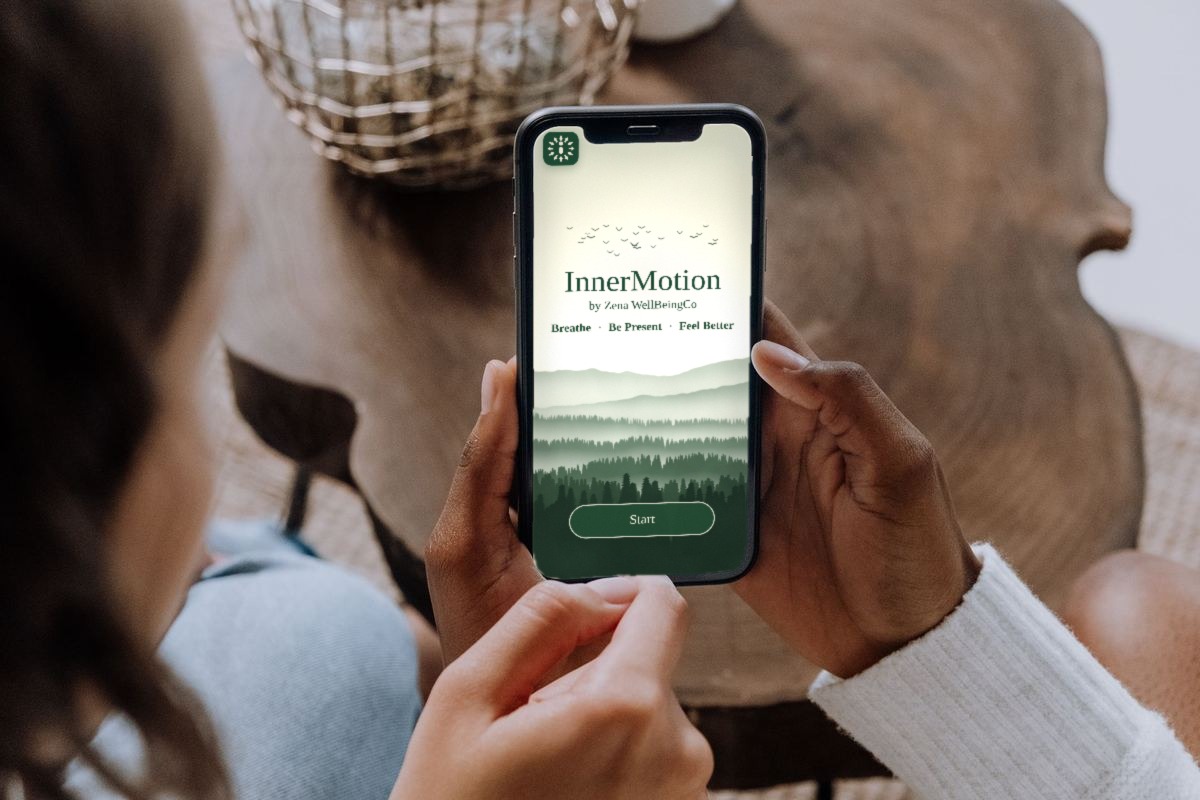
A woman holding a phone showing the InnerMotion welcome screen, about to tap Start

How it works

Choose a rhythm. Pick one of nine, grouped as Wind down (Calm, Relax, Sleep, 4-7-8), Steady (Balance, Deep, Box) or Lift (Energise, Quick boost). Each one has a one-line description under the buttons.
Choose a length. One, three or five minutes.
Check in (optional). Tap a number from 1 to 5 to say how you feel right now.
Press Begin. The flock gathers in as you breathe in and opens out as you breathe out. The words on screen (“Breathe in”, “Hold”, “Breathe out”, “Rest”) and a glowing countdown ring guide you. You can pause at any time and carry on when you’re ready.
Add voice and music (optional). Emily’s calm voice tells you when to breathe in and out, and you can choose soft background music from the Music tab. Set the volume of each on the Volume tab.
Finish and see your progress. When you finish a session, a star joins My Sky, and a gold star marks the day on your calendar. Check in again to see how you feel, and look back at your month.
Share it. Breathe together with friends or your team at the same moment, send a kind words card, or try the 7-day calm challenge.

Your screen stays awake during a session, so you can put the phone down and just breathe. Your stars and settings are stored on your own device.

“Wind down for bed with the Sleep Lantern, found under More.”

Sleep lantern. A softly glowing lantern for bedtime. Tap More at the bottom of the app, then Sleep Lantern. Choose 10, 20 or 30 minutes, pick some music if you like, and press Start. Breathe in as the light softens (about 4 seconds), and breathe out as it grows (about 8 seconds). Over the session the lantern slowly dims until the screen is completely dark. Put the phone down and let go. When you’re ready, tap the screen to close it. A star joins your sky when the session finishes, and the sound is optional.

Tip: turn the volume and brightness down before you start. The screen stays on until the light has faded, and it can be used in any quiet moment, not only at bedtime.
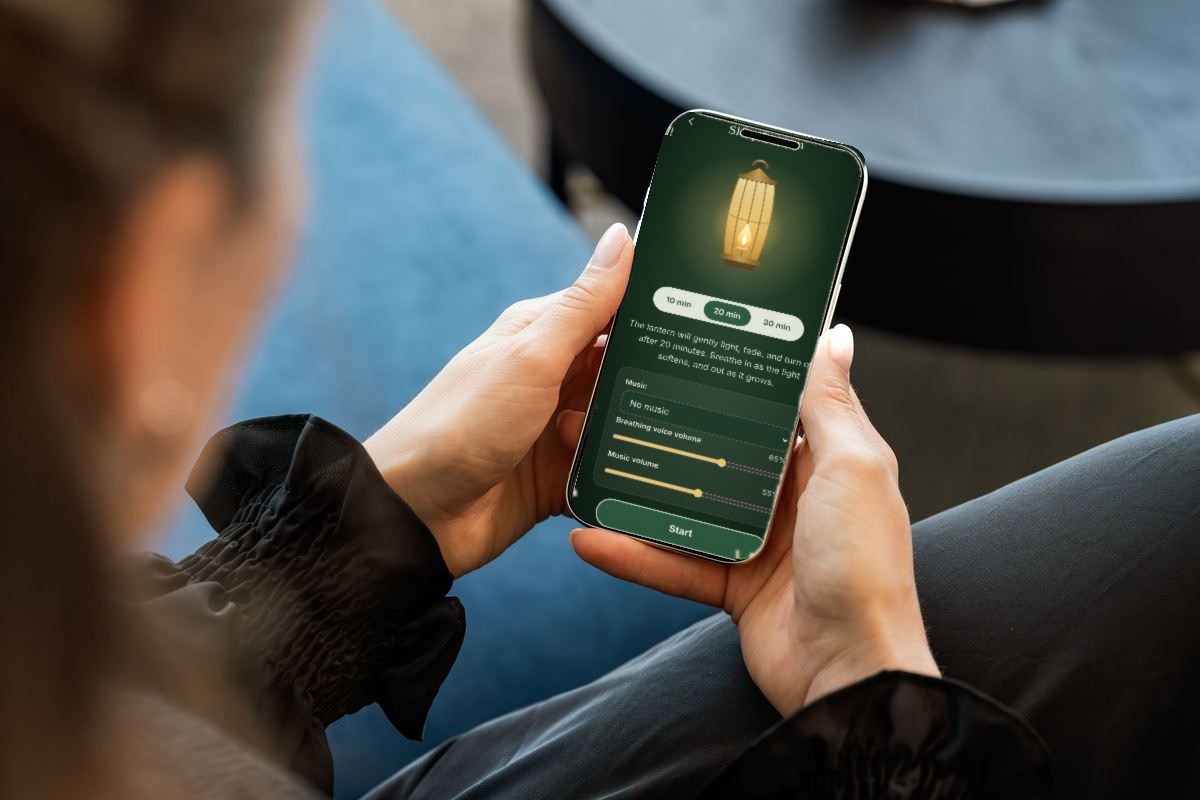
Hands holding a phone showing the InnerMotion Sleep Lantern, a glowing golden lantern with 10, 20 and 30 minute choices

The benefits of breathing

Slow, steady breathing is one of the simplest ways to pause. Health services such as the NHS recommend breathing exercises for everyday stress, and they suggest you’ll get the most from them when you practise regularly. Here’s why many people use them:

An older man resting a hand on his chest as he follows a breathing exercise on his phone
A calmer moment. Slowing your breath often helps you feel more settled, right when you need it.
A break from racing thoughts. Following the flock gives your mind one simple thing to focus on.
A gentle wind-down. Longer out-breaths are common in relaxation techniques, and many people find them settling, especially in the evening.
You notice tension sooner. The more you practise, the earlier you spot when your breathing has tightened because of stress.
Nothing to buy and nowhere special to go. One minute is enough, and you can do it at your desk, on a bus, or in bed.
A small, regular habit. A few minutes a day builds a routine, and InnerMotion keeps count so you can see it.

What slow breathing does in your body

When you’re stressed, your body switches into “fight or flight”: your heart speeds up, your breathing gets quick and shallow, and your muscles tighten. Slow breathing is one of the few ways you can gently switch it back yourself.

It calms your stress response. Slow breaths switch on the “rest and digest” side of your nervous system, which settles the body after stress.
It slows your heart. Your heart naturally speeds up a little as you breathe in and slows as you breathe out. Longer out-breaths tip the balance towards calm, which is why InnerMotion’s Wind down rhythms breathe out for longer.
It helps your heart rhythm stay flexible. A 2022 review of 223 studies found slow breathing raises heart rate variability, a sign of a relaxed, adaptable nervous system, both during a session and after regular practice.
It loosens tight muscles. Breathing slowly and deeply from your belly lets your shoulders, neck and chest let go of tension.
It quietens a busy mind. Counting and following each breath gives your attention one gentle thing to hold, so worries have less room.
It prepares you for sleep. A calmer heart and looser muscles are the same changes your body makes as it drifts off, so a few slow minutes in bed can help you wind down.

Research studies often use a pace of about five or six breaths a minute. In InnerMotion, Balance (in 6, out 6) is right at that pace. Source: Laborde and colleagues, “Effects of voluntary slow breathing on heart rate and heart rate variability”, Neuroscience and Biobehavioral Reviews, 2022.

Breathing exercises are a relaxation tool, not a treatment. If you’re struggling, please speak to your GP or someone you trust, or find a helpline at findahelpline.com. For a simple NHS exercise to try away from the app, see NHS: breathing exercises for stress.

Open InnerMotion

Add it to your phone

iPhone: open app.zenawellbeingco.com in Safari, tap the Share button, then choose Add to Home Screen.
Android: open it in Chrome, tap the three dots, then choose Install app or Add to Home screen.

Once it’s on your home screen, it opens full screen like any other app.

Your privacy

InnerMotion keeps your stars and settings on your own device. There are no accounts to create.

Please note

InnerMotion is a relaxation tool, not medical advice. If you feel dizzy or lightheaded, return to normal breathing. If you’re struggling, free and confidential support is available in almost every country at findahelpline.com.

If you need more support

If it’s more than everyday pressure, you are not on your own. Free, confidential helplines in almost every country are listed at findahelpline.com. The World Health Organization also offers a free illustrated guide to coping with stress, “Doing What Matters in Times of Stress”.

UK, NHS staff: NHS Practitioner Health, 24/7 crisis text line. Text NHSPH to 85258.
UK and Ireland: Samaritans. Call 116 123.
United States: 988 Suicide and Crisis Lifeline. Call or text 988.
Canada: 9-8-8 Suicide Crisis Helpline. Call or text 9-8-8.
Australia: Lifeline. Call 13 11 14.

A note on links

After a session, InnerMotion may suggest guided self-hypnosis audios from Growth Zone.

Disclosure: If you join through this link, Zena WellBeingCo may earn a small commission at no extra cost to you. Thank you for supporting this work.